
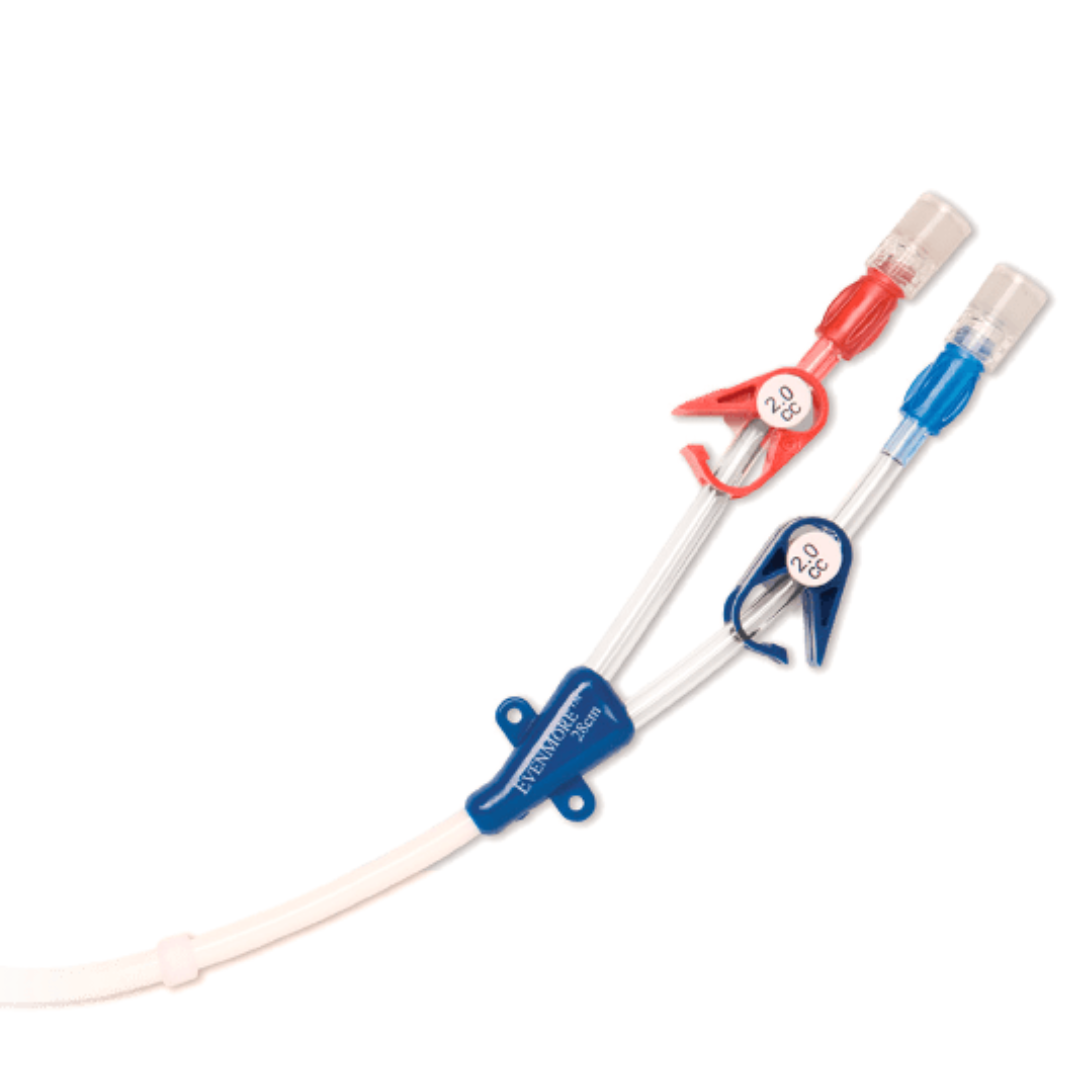
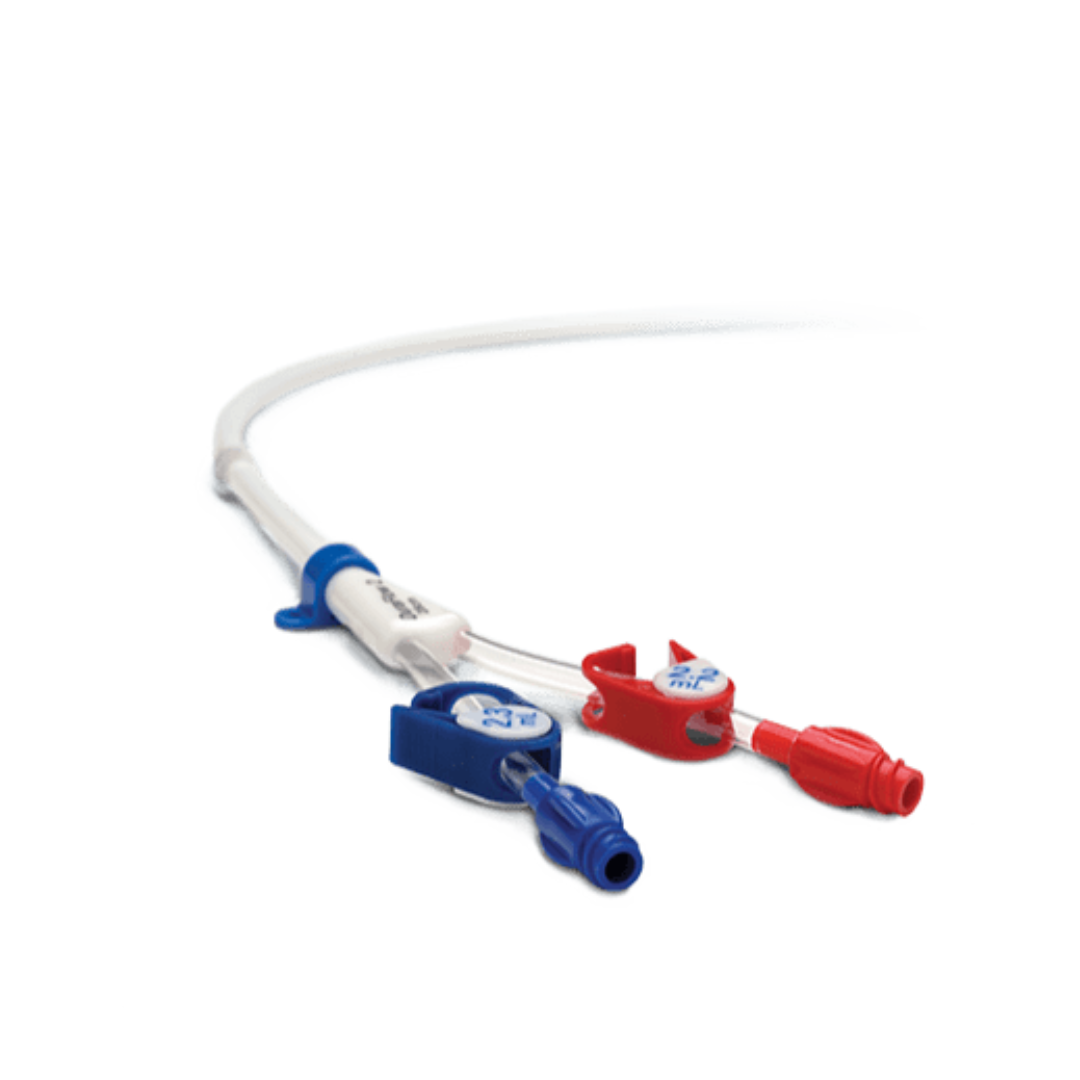
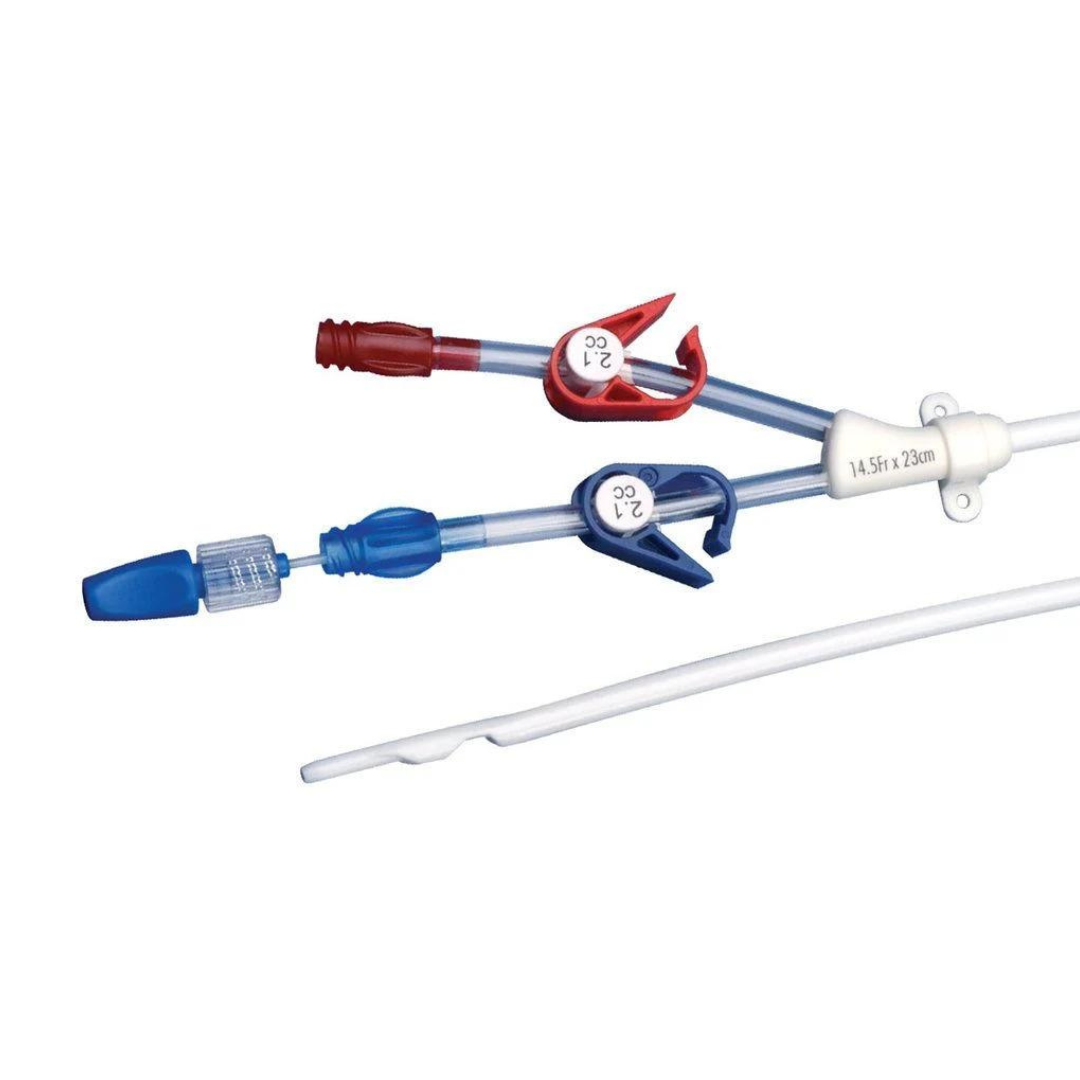
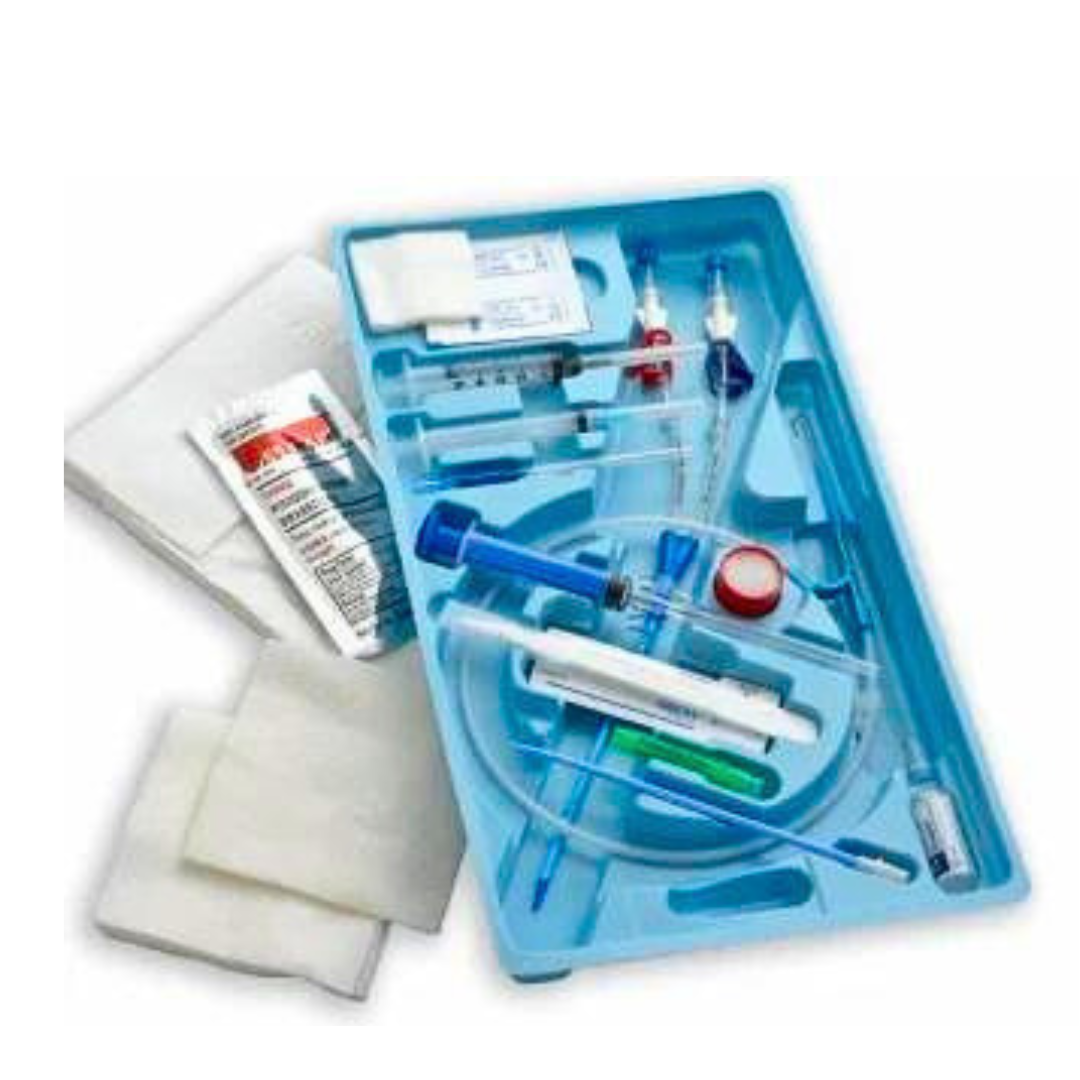
Two Way Foley Hemodialysis Catheter
Staggered V-Tip Design for Optimal Performance
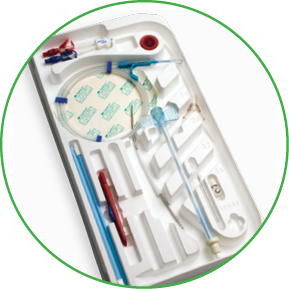
The Arrow Edge Catheter is designed to provide optimal performance by delivering high flow rates, up to 400 cc per minute, at low pressures.1 The crescent-shape of the catheter ‘s distal V- tip is designed to promote blood flow even if the tip is resting against the vessel wall.
- Innovative V-tip design and catheter tip orientation minimize the risk of recirculation when placed in the right atrium2
- Compatible with broad spectrum of antiseptic agents, including alcohol and iodine3
- Kits feature Arrow SmartSeal Hemostatic Peelable Dialysis Sheath
Related products
-
EXPORT ADVANCE ASPIRATION CATHETER
EXPORT ADVANCE ASPIRATION CATHETER
Export Advance
Aspiration Catheter
ADVANCING PERFORMANCE
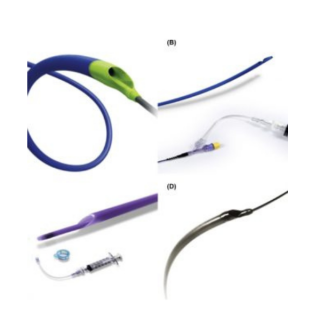
The Export Advance™ aspiration catheter delivers consistent, high-performing aspiration power when it matters most — restoring flow and protecting patients.
PRODUCT DETAILS†
Superior Deliverability1
Full-Wall Technology provides variable levels of stiffness without joints, for optimal kink resistance and catheter performance.
Dependable Delivery to the Target Site:
- Preloaded stylet enhances shaft stiffness during catheter delivery, boosting kink resistance, trackability, and pushability2
- Buddy wire compatibility allows for extra support, when needed.†
High-performing Aspiration Power:
- Large extraction lumen (0.044″ proximal; 0.043″ distal) increases aspiration power.‡
- Optimised hub geometry improves flow.‡
- Soft, short, forward-facing tip design permits excellent particle capture.†
ORDERING INFORMATION
ADVANCE 6 F min. guide I.D. 0.070″ 0.014 140 - ™Third-party brands are trademarks of their respective owners. All other brands are trademarks of a Medtronic company.
- Based on bench test data, 2013. Bench test data may not be indicative of clinical performance.
- Based on bench test data vs. Export™ AP catheter.
- Bench testing vs. Terumo Eliminate™* and Eliminate™* 3 aspiration catheters, Vascular Solutions Pronto®* LP, Pronto®* V3 and Pronto®* V4 aspiration catheters, Merit®* ASAP aspiration catheter, Kaneka Thrombuster III GR* aspiration catheter, Spectranetics QuickCat™* aspiration catheter, IHT Polska Hunter®* aspiration catheter, Medrad Possis™* Fetch™* 2 aspiration catheter, and Hexacath Recover* aspiration catheter. 10093906DOC, 2013. Bench test data may not be indicative of clinical performance.
- Based on animal studies compared with Export™ AP aspiration catheter without stylet.
-
Glide sheath
Product overview
Expanding trans-radial access to include more patients
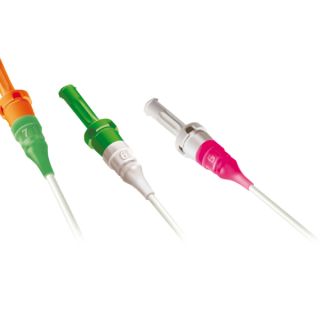
- Glide sheath Slender is designed with a proprietary thin-wall technology where the outside diameter is reduced by one French size while the inner-diameter equivalent is maintained.
- Glide sheath Slender is coated with Terumo’s proprietary hydrophilic coating, allowing for smooth insertion and removal.
Features and Benefits

The proprietary thin-wall technology and Terumo M Coat hydrophilic coating
- Per the American Heart Association, dedicated radial sheaths with hydrophilic coating combined with smaller diameter sheaths and a tapered tip design may reduce risk of arterial spasm and radial occlusion1
- Featuring Terumo’s proprietary hydrophilic coating, the Glide sheath Slender Sheath is the only thin-wall radial sheath on the market to demonstrate superior and consistent performance in lubricity and durability over time
The Glide sheath Slender Sheath is the only thin-wall sheath that demonstrated best in class performance in all of the American Heart Association’s identified critical features that lead to reduced spasm.
THE POWER OF TERUMO GLIDE TECHNOLOGY™: LUBRICITY OVER TIMES
Hydrophilic coating is critical to procedural success, Physicians need to trust that their sheath will be just as lubricous at the end of case as it is at the beginning.
The graph below demonstrates the results of recent benchtop testing. The lower the value, the more lubricious the coating. The straighter the line, the more consistent, and reliable, the performance.
Glide sheath Slender Sheath outperformed the other competitive sheaths in both key features: lubricity and lubricity over time.

Unmatched Clinical Evidence
- A meta-analysis of 10 clinical papers, involving 3,821 patients, demonstrated that use of Glide sheath Slender Sheath is associated with high rates of procedural success and low rates in performance related issues.
- In studies measuring patient comfort, patients who underwent percutaneous trans-radial procedures with the Glide sheath Slender Sheath reported none to low amounts of pain.
-
GUIDING CATHETER HEARTRAIL
Product Overview
IMPROVED BACK UP SUPPORT*1
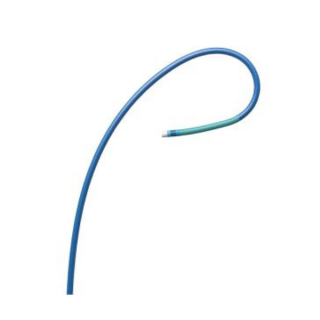
Catheter designed to use contralateral wall resulting in enhanced back-up support.
UNIVERSAL SHAPE (IKARI LEFT) *2
Offer capability of accessing the right and left coronary arteries, potentially avoiding catheter exchanges.
DESIGN FOR SAFETY
Soft tip to reduce damage to the vessel wall

*1: Ikari Y, Nagaoka M, Kim JY, Moreno Y, Tanabe T. The physics of guiding catheters for the left coronary artery in transfemoral and trans-radial interventions. J Invasive Cardio. 2005 Dec; 17(12): 636-641.*2: Youssef AA, Hsieh YK, Cheng CI, We CJ. A single trans-radial guiding catheter for right and left coronary angiography and intervention. Euro intervention 2007; 3: 475-481.
Features and Benefits
Improved back up support in comparison to Terumo standard femoral guiding catheter shapes*1
 *1: Based on comparative studies made among Terumo Guiding Catheters*2: Ikari Y, Nagaoka M, Kim JY, Moreno Y, Tanabe T. The physics of guiding catheters for the left coronary artery in transfemoral and trans-radial interventions. J Invasive Cardio. 2005 Dec; 17(12): 636-641.*3: Youssef AA, Hsieh YK, Cheng CI, We CJ. A single trans-radial guiding catheter for right and left coronary angiography and intervention. Euro intervention 2007; 3: 475-481.
General Specifications
Sizes Available Item Code JL3.5/5F TCO06GC-F5JL350N JL3.5/6F TCO06GC-F6JL350N JL4.0/6F TCO06GC-F6JL400N JR3.5/5F TCO06GC-F5JR350N JR3.5/6F TCO06GC-F6JR350N JR4.0/5F TCO06GC-F5JR400N JR4.0/6F TCO06GC-F6JR400N JR4.0/7F TCO06GC-F7JR400N MULTIPURPOSE 6F TCO06GC-F6MP010N TR4.0/6F TCO06GC-F6TR400N Heartrail II is developed to maximize your back-up force when using right and left Ikari curves during transradial interventions and through its innovative 5-in-6 system.
Its high-strength wire braiding provides exceptional kink-resistance in tortuous blood vessels, while assuring superior torque response. It also has gentle tip and powerful shaft performance.
-
CLOSUREFAST
ClosureFast™
procedureMinimally invasive thermal
treatment for vein disease
and varicose veins.
The ClosureFast procedure uses radiofrequency energy or heat to close the diseased vein, which redirects blood flow to healthy veins, relieving symptoms.Before the procedure
You will have an ultrasound imaging exam of the leg being treated. This exam is important for assessing the diseased superficial vein and planning the procedure.
During the procedure
Your doctor will discuss the procedure with you. Here is a brief summary of what to expect:
- The ClosureFast procedure is performed on an outpatient basis. Your doctor will perform the ClosureFast procedure. Using an ultrasound, your doctor will position a catheter in the diseased vein through a small opening in the skin.
- The small catheter delivers heat to the vein wall, causing it to shrink and seal the vein. Once the diseased vein is closed, blood will reroute itself to other healthy veins.
After the procedure
- You will be taken to the recovery area to rest.
- Following the procedure, your doctor will apply a simple bandage over the insertion site and will give you compression stockings to aid in the healing process. Your doctor may encourage you to walk and to refrain from extended standing and strenuous activities for a period of time. The average patient typically resumes normal activities within a few days.1,2
- Your doctor will recommend follow-up care as needed.
-
Benefits of the ClosureFast procedure
- Relief of symptoms after two days, with a noticeable improvement in one to two week
- Minimally invasive outpatient procedure
- Less pain and bruising than laser treatment
- Faster recovery than laser treatment
- Proven results with positive patient experience
- Rapid recovery — on average, patients resume normal activities within a few days
- Lasting results — the only radiofrequency energy procedure with published long-term clinical data demonstrating safety and efficacy, with a 91.9% closure rate at five years.4
Adverse events can include nerve injury, hematoma, phlebitis, thrombosis, and/or pulmonary embolism.
Type of therapy
Thermal shrinkage of the vein wall with radiofrequency energy or heatInpatient or outpatient procedure
Outpatient procedureOne- versus two-leg treatment
Typically, each leg will be treated in separate appointmentsNeedle sticks required
One needle stick for vein access. Typically, 5 to 10 needle sticks for anesthesia.Typical post-treatment recovery
Healing of vein access site, anesthetic needle stick sites, and also healing of ablated vein sectionCompression hose
Required for approximately one weekProcedure success rate
91.9% after five years4ClosureFast procedure FAQ
Is the ClosureFast procedure painful?
Most patients report feeling little, if any, pain during the ClosureFast procedure.3 Your doctor will give you a local or regional anesthetic to numb the treatment area.
When can I return to normal activity?
Patients treated with the ClosureFast procedure may resume normal activity more quickly than patients who undergo surgical vein stripping or laser ablation. With the ClosureFast procedure, the average patient typically resumes normal activity within a few days.2 For a few weeks following the treatment, your vein specialist may recommend a regular walking regimen and suggest you refrain from strenuous activities (heavy lifting, for example) or prolonged periods of standing.
When will my symptoms improve?
Most patients report relief of symptoms after two days, with a noticeable improvement in one to two weeks.
Is there any scarring, bruising, or swelling after the procedure?
Most patients report limited to no scarring, bruising, or swelling following the ClosureFast procedure.3
How is the ClosureFast procedure different from endovenous lasers?
Both Closure Fast and lasers use thermal technology to deliver heat into the diseased vein, but they each use a different method of delivery. Despite their similarity in using heat, a 2009 study showed that the ClosureFast procedure is associated with lower rates of pain, bruising, and complications and a faster improvement in patients’ quality of life when compared to 980 nm laser ablation.4
How is the Closure Fast procedure different from vein stripping?
During vein stripping, incisions are made in the groin and calf, and a tool is threaded through the diseased vein to pull the vein out of the leg. With the ClosureFast procedure, only one small incision is made at the insertion site and the vein is then treated and left in place. ClosureFast is a minimally invasive approach that reduces the likelihood of pain and bruising, associated with vein stripping surgery.1
Is the ClosureFast procedure covered by insurance?
Many patients have access to the ClosureFast procedure through their insurance coverage plan. Insurance companies detail access to the ClosureFast procedure and other radiofrequency ablation procedures in coverage policies for varicose veins or chronic venous insufficiency. As with all healthcare procedures, you may also have some cost associated with receiving treatment, such as a copay or coinsurance. Please reach out to your insurance company to discuss your specific plan coverage and potential costs prior to seeking treatment

Reviews
There are no reviews yet.