


COMMAND 18 ST 300CM
- Hybrid design technology provides the best of both nitinol and stainless steel
- Durability. Period.
- 0.018” wires designed for access and cross above and below the knee
- The HT Command 18 ST has a 10 cm nitinol distal tip, which provides high support and a flexible tip (4 g) designed for crossing occlusions or prolapsing in the subintimal plane.
- The HT Command 18 LT has a 25 cm nitinol distal tip, which provides flexible support and a soft tip (4 g) to effectively track through tortuosity.
This size is also available-
| COMMAND ES 300CM 0.14 |
Related products
-
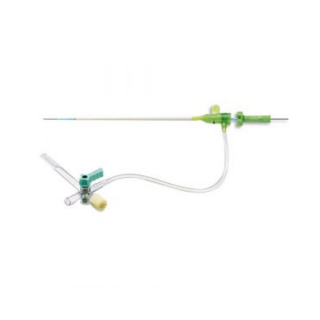
RADIFOCUS REDIAL SHEATH
Providing you the best range of Terumo Radifocus Radial Introducer Sheath and Cordis Femoral Introducer Sheath with effective & timely delivery.
The radial artery access sheath is used to gain arterial access and facilitate the insertion of catheters or other equipment for diagnostic and vascular interventions.
- The Cordis AVANTI®+ Introducer is the pioneer of catheter sheath introducer technology. Featuring a patented SLIX Valve, the AVANTI®+ introducer provides smooth transitions, monitoring capabilities and exceptional performance for your procedural success, as well as
- A hexacuspid design that provides a balance between catheter maneuverability and hemostasis.
- A rotating suture collar that facilitates procedural flexibility. It stays in place and allows patient movement.
- A kink-resistant cannula design integrating a soft, flexible inner layer with a stiffer outer layer designed to increase bendability and support, and decrease kinking.
- Atraumatic tip transitions for both the sheath and the vessel dilator are uniquely tapered and manicured. This results in smooth insertions and helps to minimize damage upon entry.
As part of the circulatory system, the radial artery supplies blood from the heart to the forearm.
Radial sheaths had the smallest OD (1 Fr smaller) when compared to similar sized conventional sheaths. For instance, the OD of 4 Fr radial sheath (1.610 ± 0.006 mm) is essentially the same as the OD of the conventional 3 Fr (1.644 ± 0.016 mm) and 3.3 Fr (1.635 ± 0.005 mm) sheaths.
-
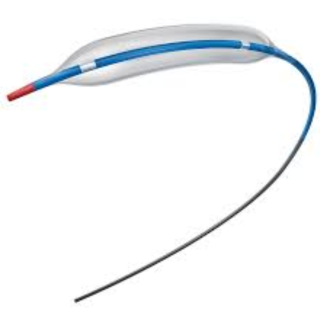
NC EUPHORA NONCOMPLIANT BALLOON CATHETER
NC Euphora™ noncompliant balloon
NC Euphora™ noncompliant balloon dilatation catheter combines Euphora technology with controlled, high-pressure performance.
Balloon Dilatation Catheter
OVERVIEW
From Collaboration to Innovation
When it comes to controlled, high-pressure performance, the NC Euphora™ noncompliant balloon dilatation catheter has what you’re looking for:
- High RBP up to 20 atm
- Low-growth profile1
- Superior deliverability1
In fact, we worked with nearly 2,000 interventional cardiologists and cath lab professionals to develop it — so you can choose it with confidence for your patients.
PRODUCT DETAILS
Looking for NC Euphora Noncompliant Performance?
-
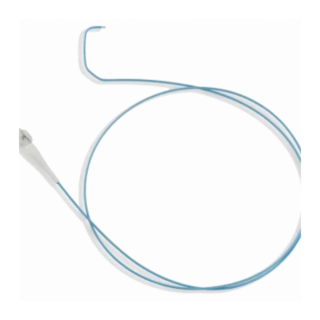
Coronary Diagnostic Catheter (OPTITORQUE)
PRODUCT OVERVIEW
A complete line of coronary diagnostic catheters designed for superior torque control and precise placement.
RADIAL-SPECIFIC UNIVERSAL SHAPES
- Radial Specific curves designed to enable support and alignment during catheterization1
- Excellent back-up support for angiography of both RCA and LCA with a single catheter1,a
- Universal design eliminates the need for catheter exchanges and potentially shortens procedural and fluoroscopic time
1. DOF Reference
a. when compared to leading competitors
2. Ikaria article.OPTITORQUE Classic Shapes
Shape Category Product Code
5 Fr / 1.70 mmProduct Code
6 Fr / 2.00 mmShape Name (cm) Length Holes Side Tip Shape Pigtail 40-5030 40-6030 Straight Pigtail 110 6 40-5031 40-6031 Angled Pigtail 155° 110 6 Judkins Left 40-5040 40-6040 JL 3.5 (Judkins Left 3.5 cm) 100 40-5041 40-6041 JL 4.0 (Judkins Left 4.0 cm) 100 40-5042 40-6042 JL 5.0 (Judkins Left 5.0 cm) 100 Judkins Right 40-5043 40-6043 JR 3.5 (Judkins Right 3.5 cm) 100 40-5044 40-6044 JR 4.0 (Judkins Right 4.0 cm) 100 40-5045 JR 5.0 (Judkins Right 5.0 cm) 100 Bypass 40-5050 40-6050 Internal Mammary 100 Amplatz 40-5060 AL 1 (Amplatz Left Small Type) 100 40-5061 40-6061 AL 2 (Amplatz Left Middle Type) 100 UNIQUE DESIGN
- Designed for coaxial alignment to the ostium, allowing the catheter to sit at the appropriate angle for optimal engagement
- Large lumen allows high flow of contrast media and allows downsizing of French size
PROVEN PERFORMANCE
- Superior torqueability for precise placement1,a
- Excellent trackability in tortuous anatomy while navigating the radial artery1,a
- Superior flow rates for diagnostic imaging1,a
1.DOF
a. When compared to leading competitors -
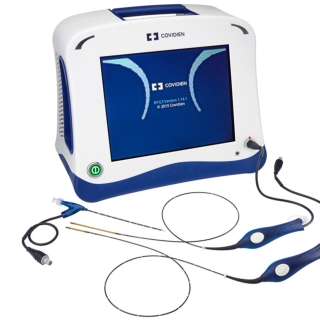
CLOSUREFAST
ClosureFast™
procedureMinimally invasive thermal
treatment for vein disease
and varicose veins.
The ClosureFast procedure uses radiofrequency energy or heat to close the diseased vein, which redirects blood flow to healthy veins, relieving symptoms.Before the procedure
You will have an ultrasound imaging exam of the leg being treated. This exam is important for assessing the diseased superficial vein and planning the procedure.
During the procedure
Your doctor will discuss the procedure with you. Here is a brief summary of what to expect:
- The ClosureFast procedure is performed on an outpatient basis. Your doctor will perform the ClosureFast procedure. Using an ultrasound, your doctor will position a catheter in the diseased vein through a small opening in the skin.
- The small catheter delivers heat to the vein wall, causing it to shrink and seal the vein. Once the diseased vein is closed, blood will reroute itself to other healthy veins.
After the procedure
- You will be taken to the recovery area to rest.
- Following the procedure, your doctor will apply a simple bandage over the insertion site and will give you compression stockings to aid in the healing process. Your doctor may encourage you to walk and to refrain from extended standing and strenuous activities for a period of time. The average patient typically resumes normal activities within a few days.1,2
- Your doctor will recommend follow-up care as needed.
-
Benefits of the ClosureFast procedure
- Relief of symptoms after two days, with a noticeable improvement in one to two week
- Minimally invasive outpatient procedure
- Less pain and bruising than laser treatment
- Faster recovery than laser treatment
- Proven results with positive patient experience
- Rapid recovery — on average, patients resume normal activities within a few days
- Lasting results — the only radiofrequency energy procedure with published long-term clinical data demonstrating safety and efficacy, with a 91.9% closure rate at five years.4
Adverse events can include nerve injury, hematoma, phlebitis, thrombosis, and/or pulmonary embolism.
Type of therapy
Thermal shrinkage of the vein wall with radiofrequency energy or heatInpatient or outpatient procedure
Outpatient procedureOne- versus two-leg treatment
Typically, each leg will be treated in separate appointmentsNeedle sticks required
One needle stick for vein access. Typically, 5 to 10 needle sticks for anesthesia.Typical post-treatment recovery
Healing of vein access site, anesthetic needle stick sites, and also healing of ablated vein sectionCompression hose
Required for approximately one weekProcedure success rate
91.9% after five years4ClosureFast procedure FAQ
Is the ClosureFast procedure painful?
Most patients report feeling little, if any, pain during the ClosureFast procedure.3 Your doctor will give you a local or regional anesthetic to numb the treatment area.
When can I return to normal activity?
Patients treated with the ClosureFast procedure may resume normal activity more quickly than patients who undergo surgical vein stripping or laser ablation. With the ClosureFast procedure, the average patient typically resumes normal activity within a few days.2 For a few weeks following the treatment, your vein specialist may recommend a regular walking regimen and suggest you refrain from strenuous activities (heavy lifting, for example) or prolonged periods of standing.
When will my symptoms improve?
Most patients report relief of symptoms after two days, with a noticeable improvement in one to two weeks.
Is there any scarring, bruising, or swelling after the procedure?
Most patients report limited to no scarring, bruising, or swelling following the ClosureFast procedure.3
How is the ClosureFast procedure different from endovenous lasers?
Both Closure Fast and lasers use thermal technology to deliver heat into the diseased vein, but they each use a different method of delivery. Despite their similarity in using heat, a 2009 study showed that the ClosureFast procedure is associated with lower rates of pain, bruising, and complications and a faster improvement in patients’ quality of life when compared to 980 nm laser ablation.4
How is the Closure Fast procedure different from vein stripping?
During vein stripping, incisions are made in the groin and calf, and a tool is threaded through the diseased vein to pull the vein out of the leg. With the ClosureFast procedure, only one small incision is made at the insertion site and the vein is then treated and left in place. ClosureFast is a minimally invasive approach that reduces the likelihood of pain and bruising, associated with vein stripping surgery.1
Is the ClosureFast procedure covered by insurance?
Many patients have access to the ClosureFast procedure through their insurance coverage plan. Insurance companies detail access to the ClosureFast procedure and other radiofrequency ablation procedures in coverage policies for varicose veins or chronic venous insufficiency. As with all healthcare procedures, you may also have some cost associated with receiving treatment, such as a copay or coinsurance. Please reach out to your insurance company to discuss your specific plan coverage and potential costs prior to seeking treatment

Reviews
There are no reviews yet.